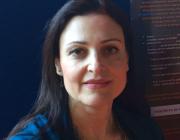

Maria Daskolia is Professor of Environmental and Sustainability Education based at the Department of Educational Studies of the National and Kapodistrian University of Athens, and Director of the Environmental Education Lab (EEL-NKUA). Since 2025, she has been appointed as elected Deputy Head of the Department of Educational Studies. She is also WP9 Leader within the CIVIS European Universities Alliance, where she has been actively involved as NKUA representative since 2019. She teaches at both undergraduate and postgraduate levels and has participated as an expert in Environmental Education and Education for Sustainability in several European and nationally funded research projects. She has supervised doctoral and postdoctoral theses and a large number of Master’s theses. She is an active member of the NKUA’s Sustainability Committee and has served as an elected member of the Scientific Board of the Hellenic Academic Association for Environmental Education for Sustainability. Her work has been published in many academic journals, edited volumes and conference proceedings. She has authored or edited 5 books.
Education
- Degree in Philosophy, Pedagogy and Psychology (1988, NKUA)
- MSc in Environmental Psychology (1990, University of Surrey - UK).
- PhD in Environmental Education (2000, NKUA)
Current research interests
- Integration of citizen science practices and technologies in environmental education for sustainability.
- Learning and teaching with climate change education.
- Environmental humanities as new 'paradigms' for theoretical, pedagogical and research thinking and practice in environmental education for sustainability.
- Drawing on psychological concepts, models and theories for learning, communicating and engaging with current environmental issues.
- The design of educational practices for environmental education for sustainability making use of digital technologies and tools (games, microcosms, storytelling).
- Environmental education for sustainability in non-formal and informal learning environments (museums and cultural institutions, historical and heritage sites, libraries and archival collections, arts and urban landscapes).
- Narrative inquiry as a research methodology and a professional development process for teachers in environmental education for sustainability.
- Creative thinking/creativity and how to foster it in the context of environmental education for sustainability.